Nonprofit Budgeting: How to Plan Your Finances + Template
September 17, 2025
If your internal team is concerned about your nonprofit’s financial situation and sustainability, you aren’t alone. In their responses to the 2024 National Survey of Nonprofit Trends and Impacts, 55% of nonprofit leaders indicated that their top organizational concern going into 2025 was financial health. The majority of that group specifically cited revenue uncertainty amid increasing expenses as a key source of their worries.
Fortunately, your organization has access to many tools to help overcome these challenges and continue funding your mission in an ever-changing economic environment—particularly its budgets. In this guide, you’ll learn all you need to know about nonprofit budgeting, including:
Creating strategic, comprehensive, and adaptable budgets is particularly important for addressing expense and revenue-related concerns and securing your nonprofit’s financial future. Let’s get started!
Nonprofit Budgeting: Frequently Asked Questions
Whether you’re developing your first nonprofit budget or want a refresher on the basics before creating another one, you’ve come to the right place! We’ve answered a few common questions about nonprofit budgeting below to help you find your footing.
What is a nonprofit budget?
A nonprofit budget is a financial planning document that projects your organization’s spending and revenue generation for a specified period of time. Its goal is to ensure your organization allocates its resources as efficiently as possible to help you further your mission.
We intentionally mentioned your nonprofit’s budgets (plural) before because your organization likely won’t follow just one budget at a time. Rather, there are a few different types of nonprofit budgets used for different purposes, including:
Operating budgets. This resource is likely what first comes to mind when considering your nonprofit’s budget because it’s the master financial plan that outlines all of your predicted revenue and expenses for a given fiscal year.
Capital budgets. These budgets project the expenses associated with running multi-year initiatives (such as capital campaigns) and detail the revenue you’ll use to cover them.
Fundraising campaign budgets. These are similar to capital budgets in that they predict upfront expenses and show how you’ll pay for them, but on a smaller scale, covering just one fundraising event or other highly involved campaign.
Program budgets. Launching new community programs or mission-related services involves many one-time and new recurring costs, and program budgets are helpful for tracking those and managing revenue designated for those initiatives.
Grant proposal budgets. In most grant applications, grantmakers request a budget showing how your nonprofit plans to allocate the funding if you secure it and what supplemental revenue you’ll put toward the target initiative to demonstrate that you’d manage grant funds wisely.
We’ll focus primarily on annual operating budgets throughout this guide since they’re the most comprehensive and all of your other budgets should align with them. However, every budget has the same basic purpose—to project revenue and expenses—so some creation tips we’ll discuss apply across the board.
Why is budgeting important for nonprofits?
Your nonprofit can experience several benefits from developing strong budgets, such as:
Maximizing resources. Considering that 92% of nonprofits bring in less than $1 million per year, the problem of limited resources is common in the sector. However, a detailed plan showing where your funding will come from and where it will go will help you make the most of what you have.
Maintaining compliance. Budgeting helps ensure your organization reinvests all of its funding into itself (a requirement for nonprofits—more on that later) and honors any donor- or funder-imposed restrictions on revenue.
Making informed decisions. Financial and strategic planning should go hand in hand, meaning your nonprofit’s overarching goals should inform its budgets and that financial documentation should influence decisions about your organization’s growth and direction.
There are a lot of external and internal demands on your nonprofit, whether they come from the government, supporters, beneficiaries, staff and board members, or society at large. As a major piece of the financial management puzzle, budgeting is critical for effectively meeting all of those demands and allowing your organization to thrive.
Who should be involved in the nonprofit budgeting process?
Especially when it comes to your operating budget, budget creation should be a team effort. Everyone the budget will affect needs to have a hand in its development, including:
Nonprofit financial professionals, who will take the lead on budgeting by analyzing past revenue and expense data and forecasting cash flows accordingly.
Representatives from other departments at your organization, such as fundraising, programming, and marketing, who should have a say in how much funding goes toward their day-to-day activities.
Executive team members, who will help ensure alignment between your operating budget and strategic plan.
Board members, who have to sign off on all budgets before they go into effect.
In some cases, you may even ask for supporter input on your budgets. If you’re trying to cultivate a major donor who has a background in finance, you might give them the opportunity to sit in on budgeting meetings and offer their advice as a way of providing insider access to your nonprofit’s operations before they give. Some organizations with close-knit member bases (especially churches and other houses of worship) also have members vote on their annual budgets before they go into effect.
What misconceptions exist around nonprofit budgets?
Nonprofit budgeting is frequently misunderstood. In particular, the following three budget-related misconceptions have penetrated the sector:
Myth #1: Break-even. By definition, an organization that’s classified as a nonprofit by a national government (501(c)(3) organizations in the U.S.) can’t turn a profit. This means your nonprofit has to reinvest all of the money it earns into itself and its work rather than paying out any leftover funds to shareholders or investors. However, misunderstandings around what profit actually is from an accounting standpoint have led to the inaccurate belief that nonprofits have to spend exactly as much money as they bring in each year.
Reality: Not only is your nonprofit allowed to budget for a revenue surplus, but it’s highly recommended that you do so if possible! Planning to bring in more than you spend during a given year provides a safety net in case expenses are higher than expected or some projected funding falls through. Plus, you can use any revenue you don’t spend to build up your organization’s reserve funds, which are a major contributor to both financial stability and growth potential.
Myth #2: The 65/35 “rule.” All of your nonprofit’s expenses will either directly further your mission (known as program costs) or support its fundraising and operational needs (known as overhead). In the past, it was a fairly hard-and-fast rule that nonprofits needed to spend at least 65% of their revenue on program costs and no more than 35% on overhead. There was also a negative connotation associated with the latter because overhead was believed to take funding away from mission-critical work.
Reality: The exact breakdown of program vs. overhead spending will look different for every nonprofit. Overhead isn’t inherently bad—in fact, it’s necessary for your organization to run day-to-day—but it also shouldn’t dominate your spending. Treat the 65/35 “rule” as a guideline to ensure you’re putting the majority of your revenue toward your programs and cutting overhead costs first if you need to reduce expenses in order to budget for a revenue surplus.
Myth #3: Set-it-and-forget-it. Operating budget creation typically happens in the fourth quarter of your organization’s fiscal year so your board can approve it and it can go into effect as soon as the new year begins. While the budget development meetings that run from approximately October to December (if you use the calendar fiscal year as most nonprofits do) are important, many organizations only schedule those meetings and don’t revisit their operating budgets at any other time of the year.
Reality: Your financial professionals, leadership team, and board representatives should meet at least once a month to review budget progress. Use documents like cash flow statements, treasurer reports, and budget vs. actual statements to assess how well your organization is sticking to its budget and if you need to make any adjustments due to unforeseen revenue or expense fluctuations.
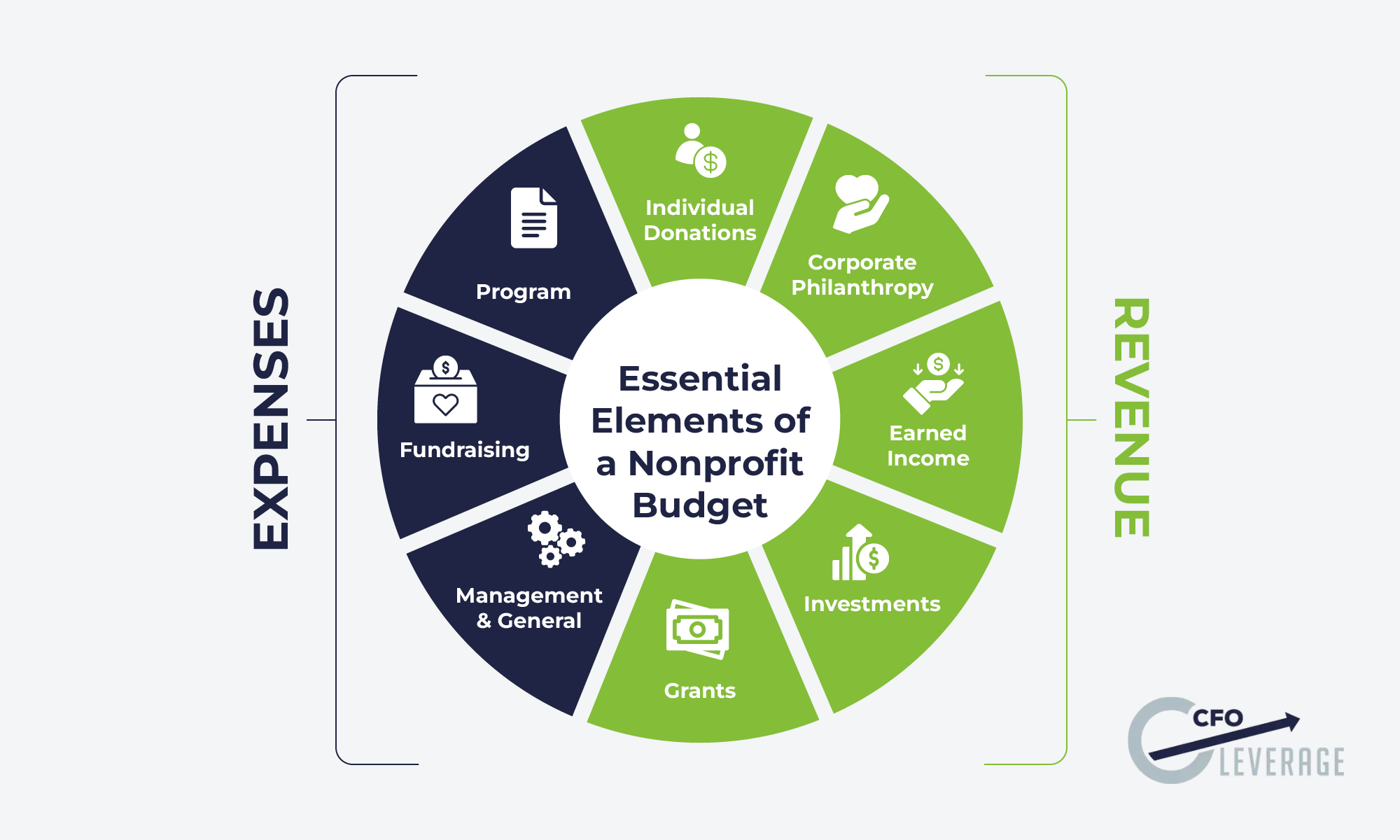
Essential Elements of a Nonprofit Budget
Now that you have a solid foundation for nonprofit budgeting, let’s dig into the two main sections of every budget: expenses and revenue. It’s often easiest to estimate costs first and then figure out how to cover them (adjusting as needed), so we’ll start on the expense side before moving to revenue.
Expenses
There are two basic ways to organize expenses in your organization’s operating budget: based on the nature of payments made (i.e., natural expense categorization) and based on how each expenditure furthers your mission (i.e., functional expense categorization). Most nonprofits choose functional expense categorization for the overarching structure of their budget so it aligns with their financial statements and other reports. Then, they use natural expenses as subcategories for a more in-depth view of projected spending.
The three major categories of functional expenses include:
Program costs, which are directly related to furthering your organization’s mission and are therefore very specific to your cause. For example, if your organization provides free after-school music lessons to children in a low-income school district, your budget line items under program expenses may include new instruments, instrument repairs, sheet music, folders, music stands, and snacks for participants.
Fundraising costs, which are the upfront expenses associated with your nonprofit’s revenue-generating initiatives. The old adage “You have to spend money to make money” rings true with nonprofit fundraising, and you might invest in event planning, marketing, fundraising software, consulting, and various other needs to achieve your revenue goals.
Management and general costs, which are necessary to operate your organization day to day (and are also sometimes called operational or administrative expenses). These costs often include rent or mortgage payments, utility bills, insurance, office equipment purchases, and staff compensation, among other expenditures.
The term “overhead expenses” we mentioned earlier refers to fundraising and management and general costs combined, so keep that in mind as you work out the best expense ratio for your nonprofit’s current financial situation.
Revenue
The best way to categorize the revenue side of your nonprofit’s budget is by source. It’s recommended that your organization have multiple revenue streams at any given time because diversification leads to increased stability (i.e., you aren’t putting all of your funding eggs in one basket).
Here are the five major categories of nonprofit revenue and some sources that fall under each one:
Individual donations: Small, mid-sized, major, and planned monetary gifts; event revenue; in-kind donations of goods, services, and assets (e.g., real estate, stocks, or cryptocurrency)
Earned income: Merchandise sales, product fundraising, membership dues, service fees (e.g., museum admission or bills from a nonprofit hospital)
Investments: Interest generated from savings accounts, endowment funds, treasury bills, bonds, certificates of deposit, mutual funds
Grants: Federal, state, and local government grants; public, private, and family foundation grants
Note that some revenue sources may overlap categories. For example, corporate grants can be grouped either with grants or with corporate philanthropy, and some organizations divide different aspects of event revenue between individual donations and earned income. What matters most isn’t the exact categorization—it’s making realistic estimates for every funding source so you can cover all of your expenses with revenue to spare.
CFO Leverage’s Nonprofit Budget Template
To help you put the tips in this guide into practice, we at CFO Leverage have created a basic nonprofit operating budget template you can use to get started. Remember to flesh out the specific subcategories your organization uses under each revenue source and functional expense category and adapt the template if you’re creating a different type of budget (capital, fundraising campaign, program, or grant proposal).
While a DIY budgeting approach can work when your organization is just starting out, CFO Leverage also provides hands-on help at every stage of the process. Our financial experts work exclusively with nonprofits, so we have plenty of experience navigating the complexities of projecting and organizing revenue and expenses for organizations just like yours. Annual budgeting is one of the core services we provide, along with recurring bookkeeping and financial analysis so your nonprofit can stay on track with spending and fundraising all year long.
Wrapping Up: Additional Resources on Nonprofit Financial Management
Nonprofit budgeting is critical for effectively managing your resources and funding your mission, and it isn’t as difficult as it sounds with a solid understanding of the process and professional support on your side. Once you’ve created and followed one budget, assess how it went so you can capitalize on your strengths and improve your process as needed going forward.
About the Author
Sam Coates, Co-Founder
Launching his first company at age 21, Sam quickly grasped the critical importance of understanding finances from a business owner’s viewpoint. His journey as an entrepreneur exposed him to various industry challenges, fostering a deep appreciation for innovative, adaptable solutions that directly address client needs. With an entrepreneurial spirit and a customer-centric approach, he continues to create practical solutions that perfectly align with clients’ unique needs.